Static Pressure: The Number Nobody Checks Before Replacing a System
Most residential blowers are built around a strict pressure budget, and almost every duct system in an older Warwick home is already spending more than it has.
September 15, 2026 · 4 min read
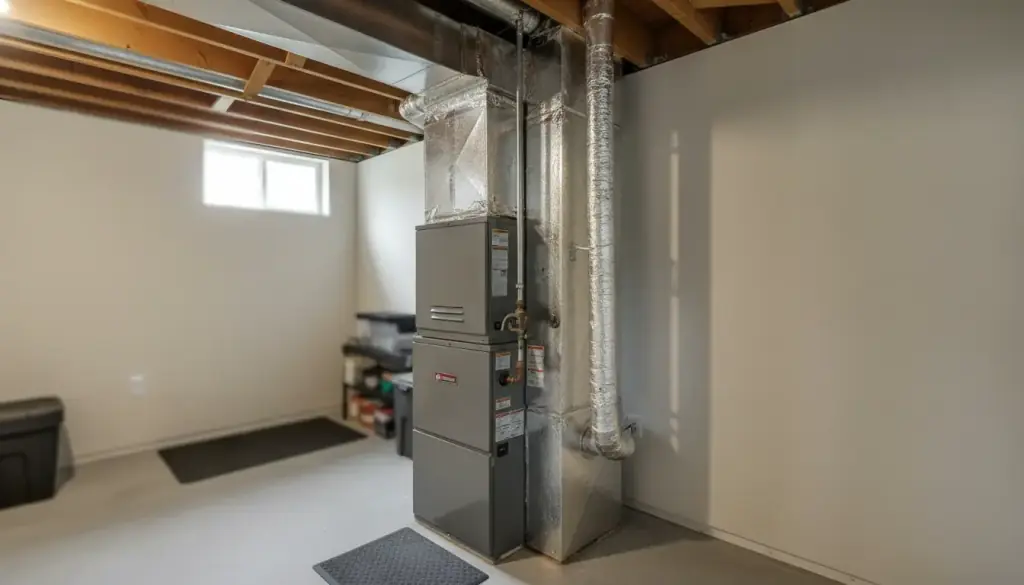
There's a number stamped on the inside of your furnace or air handler cabinet that almost nobody ever reads. It's usually printed near the blower compartment as a rating in inches of water column, something like 0.5" w.c. That single figure is the entire budget your blower motor has to move air through your whole house, and once you understand it, a lot of things that seemed like separate problems turn out to be the same problem.
What static pressure actually measures
Total external static pressure is the resistance the blower has to push against to get air through the filter, across the coil, down the supply ducts, out the registers, back through the returns, and home again. It isn't temperature and it isn't airflow volume directly. It's resistance, measured the same way you'd measure how hard it is to blow through a straw versus a wide tube. A wider, straighter, cleaner path costs less pressure. A narrow, dirty, kinked path costs more, and the blower has no idea it's supposed to slow down and complain. It just keeps spinning at whatever speed the control board tells it to, working harder and harder against a path that's fighting it.
Most residential blowers are built for about half an inch
The vast majority of residential equipment, gas furnaces and air handlers alike, is designed and tested at roughly 0.5" w.c. of total external static pressure. That's the whole allowance. Split it two ways: some goes to the return side, some to the supply side, and whatever's left over is what actually moves air through your living room and bedrooms. In a lot of homes built decades ago, before duct sizing was taken as seriously as it is now, that budget is already gone before the system ever turns on for the season.
What spends the budget
A handful of things eat static pressure, and they stack. A dirty filter is the most common and the easiest to fix, but it's rarely the only one. Here's what typically adds up against that half inch:
- A clogged or wrong-thickness filter, especially a high-MERV filter in a slot designed for a thinner one
- A coil caked with dust, pet hair, or years of surface buildup that was never cleaned
- Return ducts that are undersized for the equipment's rated airflow, a common shortcut from decades-old construction
- Flexible duct that's crushed, kinked, or was installed with far more length and sag than it needed
- Too many 90-degree elbows and transitions crammed into a tight mechanical space
- Registers and grilles that are too small or partially blocked by furniture and rugs
What a system fighting high static actually does
When a blower is pushing against more resistance than it was designed for, the airflow across the coil drops even though the motor is working just as hard or harder. In cooling, that thinner stream of air over the evaporator coil can drop the coil's surface temperature low enough to freeze, and a frozen coil blocks even more airflow, which drops the temperature further. It's a spiral, and it usually ends with a solid block of ice and a system that's stopped cooling the house at all. In heating, high static often shows up as short cycling, the furnace firing up, getting warm quickly because so little air is moving past the heat exchanger, tripping a high-limit safety switch, and shutting itself off well before the room is comfortable. Either way, the blower motor is under constant strain, and that strain is exactly what burns motors out years before they should fail.
Why a new unit alone doesn't solve it
This is the part that catches people off guard. If the old furnace or condenser dies and gets swapped for a brand new one, but the filter slot, the return ductwork, and the flex runs all stay exactly as they were, the new equipment inherits the same fight on day one. It might run a little better for a while on a fresh motor, but the underlying resistance never left. The honest fix starts with actually measuring static pressure with a manometer at the equipment, not guessing from symptoms, and then addressing whatever's actually spending the budget: a return that needs to be enlarged, flex duct that needs to be re-routed and supported properly, or a filter setup that was never sized right in the first place.
There's also a comfort symptom that gets blamed on the thermostat when it's really a static pressure problem. Rooms far from the equipment, at the end of a long duct run, stay noticeably warmer in summer and colder in winter than rooms closer to the furnace or air handler. When a blower is starved by high static, it delivers less total air, and the rooms at the far end of the run are the first to lose out because they were already getting the smallest share of a shrinking supply. Adding a bigger, stronger system doesn't fix that imbalance either, since the same restrictive ducts are still deciding how much of that air actually reaches the back bedroom.
If your system runs long spells then shuts off fast, or if you've noticed ice on the indoor coil or refrigerant lines in the summer, that's worth a real diagnostic look rather than another filter change. Cmags HVAC in Warwick can check total static pressure and tell you honestly whether the fix is in the ductwork or the equipment, not just sell you the bigger box.
Cmags HVAC, (401) 862-4998
Call (401) 862-4998More articles
That Musty Smell When Your Mini-Split Kicks On Isn't Dust
The same condensation that makes a mini-split good at cooling also makes it a place mold can grow quietly for years if the indoor unit is never opened up.
What Your Gas Furnace Is Telling You Before It Quits in January
A furnace rarely dies without warning first, and the warnings are specific enough to act on if you know what you're hearing and smelling.