What Your Gas Furnace Is Telling You Before It Quits in January
A furnace rarely dies without warning first, and the warnings are specific enough to act on if you know what you're hearing and smelling.
September 15, 2026 · 4 min read
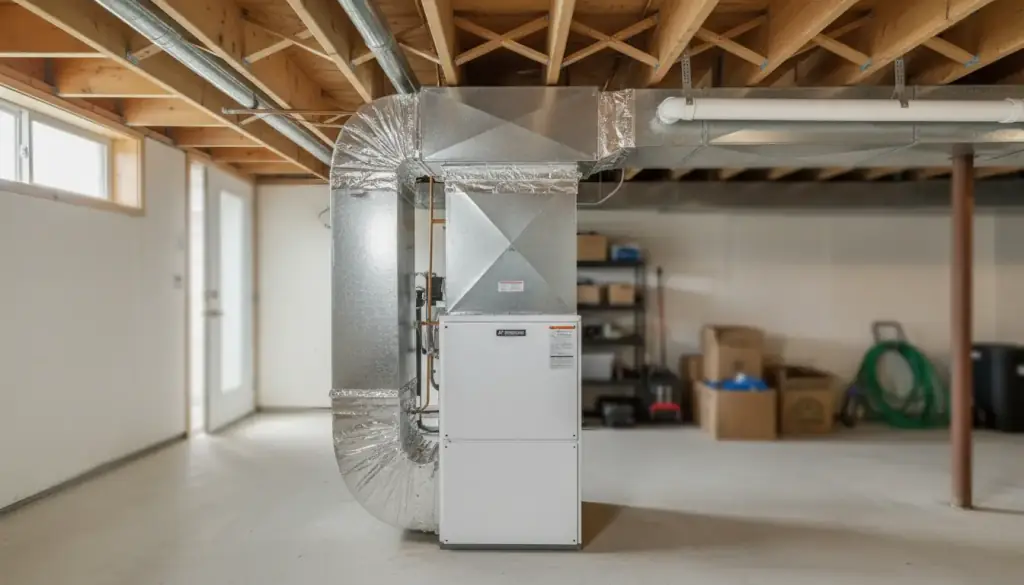
The worst time to find out a furnace is failing is the first genuinely cold night of the year, when every HVAC company in Rhode Island is fielding the same call at once. Furnaces don't usually fail without notice. They give a handful of specific signs in the weeks before, and most of them are easy to catch if you know to listen for them.
Short cycling
If the furnace fires up, runs for a few minutes, shuts off, then fires up again a short while later, over and over through the day, that's short cycling. It can point to a few different causes, from restricted airflow forcing an early shutoff on a high-limit switch to a flame sensor that's no longer detecting the flame reliably. Whatever the specific cause, short cycling wears out the components involved in every start, the igniter and the inducer motor especially, far faster than a furnace that runs a normal, complete cycle.
A dirty flame sensor
The flame sensor is a small metal rod positioned in the burner flame that confirms combustion is actually happening. It develops a thin layer of oxidation over normal use, and once that coating gets thick enough, the sensor stops reading the flame reliably even though the burners are lit and working fine. The furnace's safety logic sees no confirmed flame and shuts the gas valve, and you get a furnace that lights, runs briefly, and cuts out. This is one of the most common no-heat calls in the trade, and it's a straightforward part of routine maintenance to catch before it strands you.
Delayed or rough ignition
Listen for a delay between when the furnace should light and when you actually hear the burners catch, or a rough, huffing sound instead of a smooth ignition. That delay usually means gas is building up in the combustion chamber slightly longer than it should before it ignites, which produces a small bang rather than a clean light-off. It's not something to wait out. It points to an ignition component or gas valve timing issue that should be checked before it gets worse.
Signs at the vent and around the cabinet
- Soot or a dark stain around the furnace cabinet, the flue connection, or the vent termination outside
- Rust, especially around the heat exchanger access panel or anywhere condensation could be collecting
- A flue pipe that's disconnected, corroded through, or blocked by nesting material or debris at the outside termination
- A burner flame that looks yellow and flickering instead of a steady blue
Any of these point toward a combustion or venting problem, and combustion problems in a gas furnace are the ones worth taking seriously rather than living with for a season.
The heat exchanger and carbon monoxide, taken seriously and plainly
A gas furnace burns fuel inside a sealed metal heat exchanger, and the whole design depends on that metal staying intact so combustion gas never mixes with the air being blown into your living room. Carbon monoxide is a byproduct of that combustion, and it's colorless and odorless, which is exactly why a cracked or corroded heat exchanger is treated as a serious safety issue rather than a performance one. It won't announce itself the way a strange smell or noise does. That's why a proper annual inspection includes checking the heat exchanger itself, not just cleaning the burners, and why working carbon monoxide alarms belong on every level of the house, including outside sleeping areas, regardless of how new or old the furnace is. Chris at Cmags HVAC is Carbon Monoxide Analyst-Certified, and a combustion analysis is a standard part of a real inspection, not an add-on.
What an annual inspection actually checks
A proper furnace inspection looks at the flame sensor and igniter, tests the flue for proper draft, inspects the heat exchanger for cracks or corrosion, measures static pressure and airflow, checks gas pressure at the manifold, and runs a combustion analysis to confirm the furnace is burning cleanly. Most of the signs above get caught here before they turn into a no-heat call on the coldest night of the year.
Why timing matters in Rhode Island specifically
A furnace that's been sitting idle since April doesn't always fail the moment it's asked to run again in October or November. Components that were already marginal, an igniter close to the end of its life, a flame sensor with a heavy coating, tend to fail in the first few cold snaps rather than on the mildest early-fall day. That's exactly the window when a service call in Warwick, Cranston, or anywhere else in Kent or Providence County takes longest to get, because every furnace with the same marginal parts is failing at roughly the same time. Catching these signs in September, before the cold arrives in earnest, is the difference between a scheduled visit and a no-heat emergency on a night when everyone else needs the same thing.
Cmags HVAC, (401) 862-4998
Call (401) 862-4998More articles
Static Pressure: The Number Nobody Checks Before Replacing a System
Most residential blowers are built around a strict pressure budget, and almost every duct system in an older Warwick home is already spending more than it has.
That Musty Smell When Your Mini-Split Kicks On Isn't Dust
The same condensation that makes a mini-split good at cooling also makes it a place mold can grow quietly for years if the indoor unit is never opened up.