What a Heat Pump Actually Feels Like on a Cold Rhode Island Day
A heat pump doesn't make heat the way a furnace does, and understanding what it actually does changes what you should expect to see and hear in winter.
September 15, 2026 · 3 min read
A lot of the calls that come in about heat pumps in winter aren't actually about anything broken. They're about a homeowner noticing the system doing something a furnace never did, and reasonably assuming something's wrong. A heat pump works on a genuinely different principle than a furnace, and once you know what that principle is, most of what seems alarming turns out to be the system working exactly as designed.
It moves heat, it doesn't make it
A gas furnace burns fuel and generates heat directly. A heat pump does something closer to a refrigerator running in reverse: it extracts heat energy that's present in the outdoor air, even cold outdoor air, concentrates it through a refrigeration cycle, and delivers it inside. Even air that feels cold to you still holds usable heat energy down to quite low temperatures, and a heat pump is built to pull that energy out and move it indoors rather than create new heat from combustion.
Why the supply air feels cooler and that's normal
Put your hand up to a furnace supply register and the air feels distinctly hot. Do the same at a heat pump register and it feels warm, sometimes only mildly so, especially on the coldest days. That's not a fault. A heat pump delivers a larger volume of air at a lower temperature rather than a smaller volume of much hotter air, and it runs longer, steadier cycles to get the same total heat into the house. The room still reaches temperature, it just gets there through a different airflow pattern than a furnace does, and that's worth expecting rather than worrying over the first time you notice it.
Defrost cycles and steam off the outdoor unit
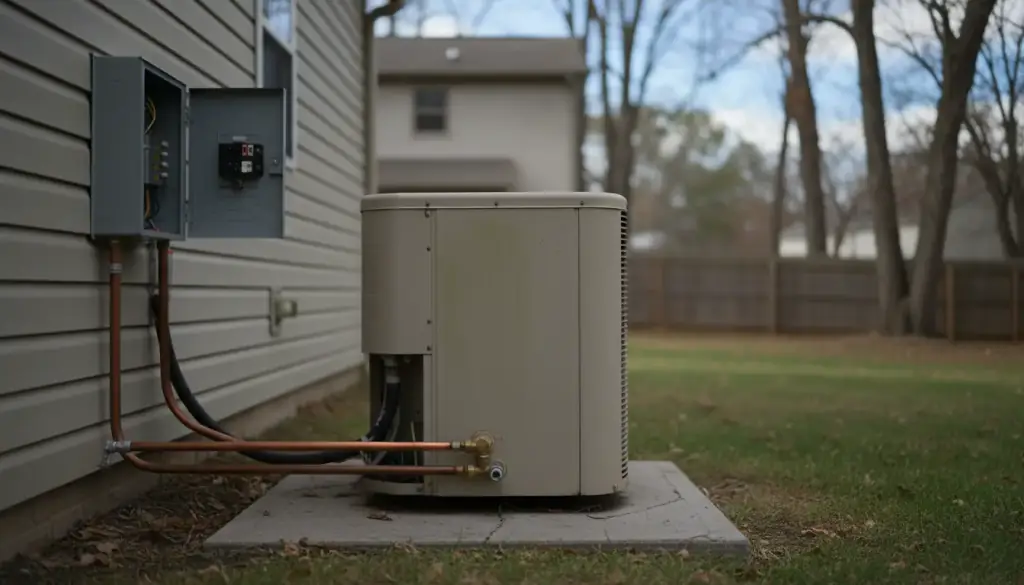
On cold, damp days, which describes a lot of Rhode Island winter weather, frost can build up on the outdoor unit's coil the same way frost builds on a car windshield. The system periodically runs a defrost cycle to clear it, which briefly reverses the refrigeration cycle to warm the outdoor coil. During a defrost cycle you may see what looks like steam or fog coming off the outdoor unit, and hear the outdoor fan pause or the system make a whooshing sound as it switches modes. This is a normal, automatic part of how a heat pump handles cold, humid air, not a malfunction, and it typically lasts only a few minutes before the system returns to normal heating.
What backup or supplemental heat is for
As outdoor temperatures drop further, a heat pump's capacity to extract heat from the air gradually decreases, which is a physical reality of the refrigeration cycle rather than a flaw in a particular unit. Many systems are paired with supplemental heat, whether electric resistance strips built into the air handler or an existing furnace, to cover the coldest stretches of the season when the heat pump alone can't keep up with the house's full heat loss. That backup isn't a sign the heat pump failed. It's a designed part of how the system is meant to operate through the coldest weeks of a New England winter.
Pairing a heat pump with gas heat already in the house
A lot of Rhode Island homes already have a gas furnace, and a heat pump doesn't have to replace it to be worth adding. In a dual-fuel setup, the heat pump handles the milder stretches of the heating season, when it operates efficiently, and the existing gas furnace takes over during the coldest snaps when it makes more sense to run on combustion heat. The two systems share the ductwork and hand off automatically based on outdoor temperature, giving you a system that's matched to whichever part of the season you're actually in rather than one piece of equipment trying to cover the whole range on its own.
- Cooler-feeling supply air than a furnace is normal, not a sign of low output
- Steam or fog off the outdoor unit during a defrost cycle is expected in cold, damp weather
- A brief pause or change in sound during defrost is the system switching modes, not stalling
- Backup heat kicking in on the coldest days is designed behavior, not a failure
If a heat pump in your home is doing something that doesn't match what's described here, that's worth a real look rather than living with it through the season. Cmags HVAC installs Carrier and LG heat pump equipment and can walk through how a system is actually behaving against how it's supposed to behave.
Cmags HVAC, (401) 862-4998
Call (401) 862-4998More articles
Static Pressure: The Number Nobody Checks Before Replacing a System
Most residential blowers are built around a strict pressure budget, and almost every duct system in an older Warwick home is already spending more than it has.
That Musty Smell When Your Mini-Split Kicks On Isn't Dust
The same condensation that makes a mini-split good at cooling also makes it a place mold can grow quietly for years if the indoor unit is never opened up.